
St. Nicholas metal and wood 24x19 0,5kg
189 SEK
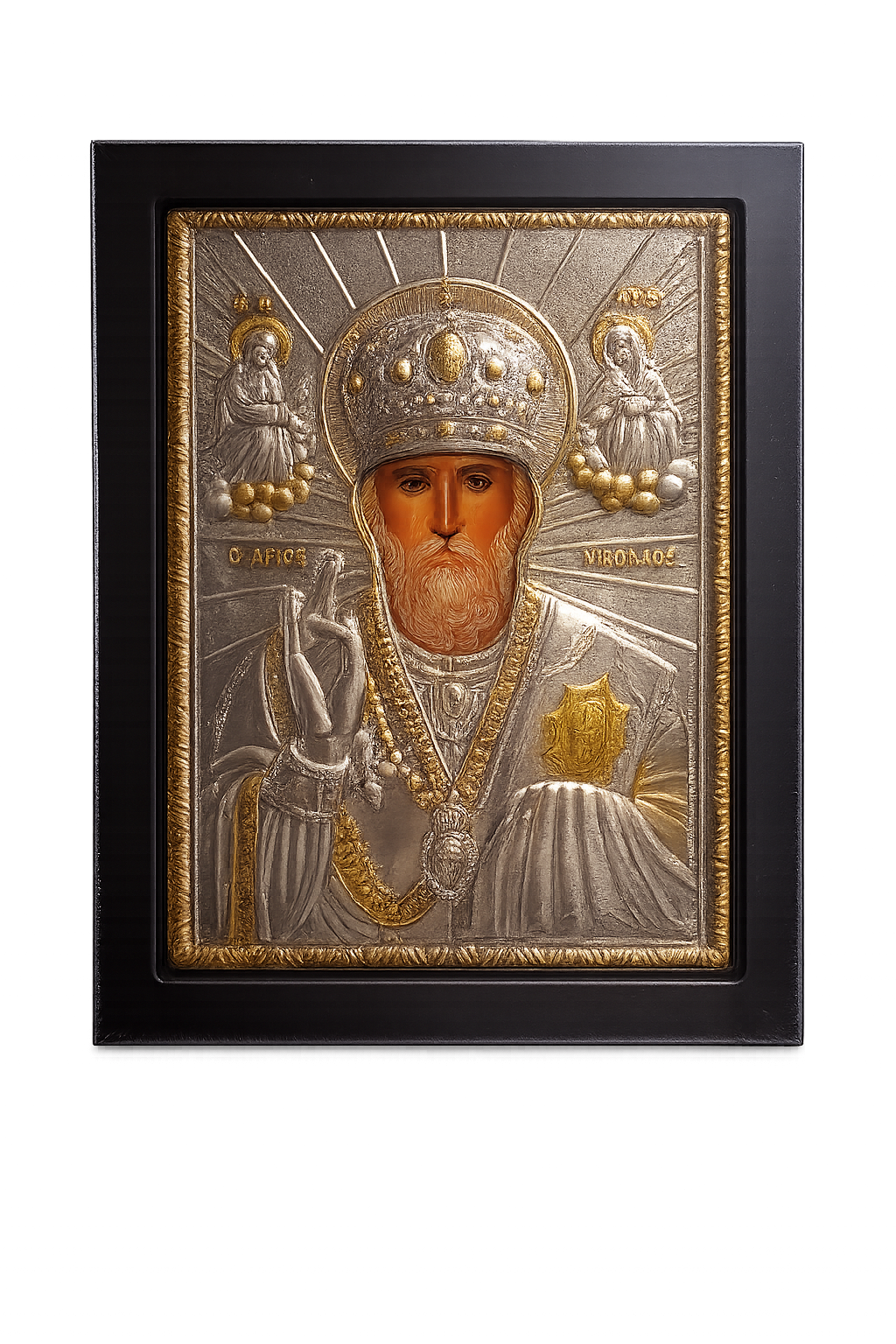
Unique St. Nicholas Metal and Wooden Figure - Perfect for decoration and gifting!
Raise the mood in your home or give someone a wonderful gift with our St. Nicholas Metal and Wooden Figure. With its impressive dimensions of 24x19 cm and weight of 0.5 kg, this figurine is sure to be an eye-catching piece of decoration.
This handmade figurine is made of high-quality metal and wood, giving it a rustic and authentic feel. Its detailed design and colorful painting create
- Secure payment by card
- Free shipping from SEK 799!
- Email us, we will respond quickly!
Description
Article no.: 1000743
St. Nicholas
metal and wood
24x19 0,5kg
St. Nicholas of Myra or Nicholas the Wonderworker (Greek Νικολαος, Latin Nicolaus Myrensis or Nicolaus de Myris), born around 280 in Patara (later Arsinoe), Lycia, died December 6, 343 in Myra, Lycia, was the Archbishop of Myra in present-day Turkey. He is venerated as a saint in the Catholic Church, Eastern Orthodox Church and Oriental Orthodox Church, with a feast day of December 6. He is also known as St. ClausMuch of the information about Nicholas's life cannot be fully evaluated historically, and sometimes takes on a somewhat legendary character, although his existence is considered proven. He was born in Lycia to Christian parents. Legend has it that as an infant he refrained from nursing his mother on Wednesdays and Fridays, and that he was born with a saintly personality characterized by a desire for seclusion and silence. After being ordained a priest by his relative, he went to Jerusalem to become a hermit, but eventually returned to his hometown where he became an archbishop. This was just before the severe persecution of Christians under the emperors Diocletian and Maximian, and Nicholas himself experienced the hard times by spending some time in prison. Only when Constantine the Great came to power was he released. He attended the First Council of Nicaea, and participated in the struggles against Arianism at the time; it is said that he punched Arius in the face, and that the canonical penalty he was to receive was canceled by the miraculous intervention of the Virgin Mary.
Above all, Nicholas became known for his generosity, and for his efforts to avoid emphasizing that he himself was the donor. When his parents died, he gave away his entire inheritance to the poor, and he saved three daughters of an indebted man from prostitution by throwing them a bag of gold three nights in a row. The latter story is the basis for today's Sinterklaas, sancta Claus, Santa Claus.
Nicholas is also famous for performing miracles during his lifetime. Most famously, his prayers were said to help ships in storms. It was also said that he could be in several places at once during his life.
After his death, he was first buried in Myra, but his relics were taken to Bari in Italy when the Saracens took over. Believers believe that a sacred oil comes from these relics; this is called Manna di San Nicola and is said to have miraculous powers. His cult was initially concentrated in Greece, but spread to the rest of Europe, including through the marriage of Greek princesses to northern European royalty. He is the patron saint of Greece, Serbia, FYROM and Russia.